6/24/2025 | Updated on 12/5/2025 | Reading time: 2min
Artificial Intelligence in the Age of Sustainability
Artificial intelligence (AI) is rapidly changing our lives. However, this development also brings societal challenges – particularly with regard to the increasing energy consumption. While society is increasingly encouraged to save energy, the demand for computing power for AI applications is growing rapidly. This raises the question: How can we minimize the ecological footprint of AI technologies while maximizing their potential?
-
Team
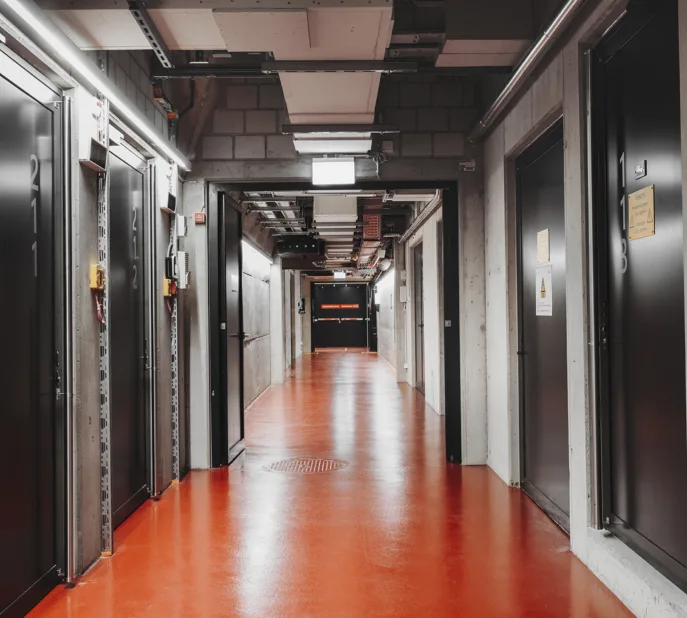
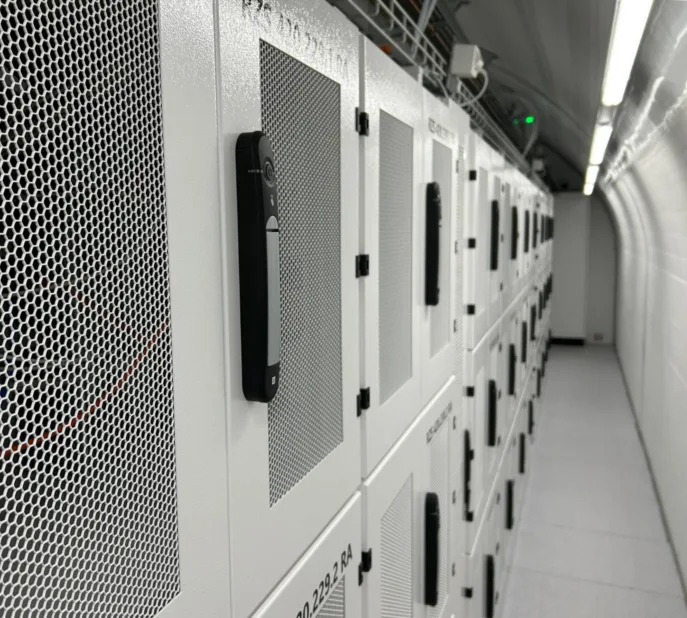
Data Center Stollen Lucerne
How efficient data centers contribute significantly to CO2 reduction.
Efficient computers and data centers are central to this. The increasing use of AI requires powerful computers that can process immense amounts of data in real-time. These computers are operated in large data centers. This is often associated with considerable energy consumption in traditional data centers and – depending on the energy mix – increased CO2 emissions. The energy demand arises on the one hand from the operation of the data center, and on the other hand from the IT components installed in it, such as servers, storage, and network devices. The focus is now on developing technologies that are both powerful and sustainable.
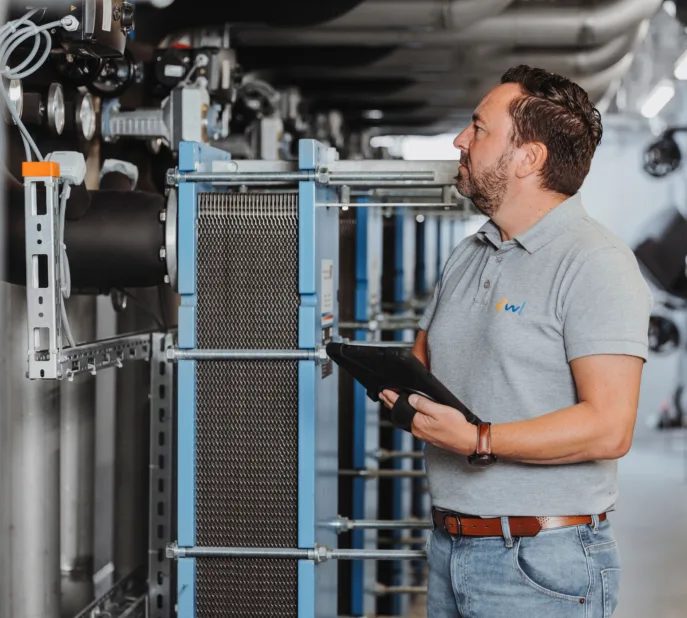
Highly efficient data centers like the Stollen Luzern data center by ewl energie wasser luzern are taking a pioneering role in this regard. By using state-of-the-art energy management technologies, they can drastically reduce their energy consumption. Future-oriented solutions also include operation through renewable energy, advanced cooling technologies, the use of generated waste heat, and the continuous optimization of server and storage architectures.
The choice of hardware is also crucial: hardware with minimal energy consumption is in demand. Thanks to research and innovation in processor technology, increasingly energy-efficient chips are being developed that enable powerful computations with minimal energy consumption. These advances are significant not only from an ecological perspective but also help reduce the operating costs of data centers – and thus their customers.
Collaboration between technology companies, governments, and research is essential to ensure this sustainable handling of AI. This includes incentives for companies, industry standards for environmentally friendly data centers, or development support for green technologies.
Not to be forgotten is the intelligent use of AI itself: AI algorithms can be specifically used in the management and optimization of data centers. Through machine learning and predictive analytics, energy consumption can be monitored and optimized in real-time. This way, "intelligent" data centers dynamically adapt to current requirements, can optimize performance, and minimize energy consumption.
In the future, AI in data centers will not only increase the performance of technology but also significantly contribute to reducing CO2 emissions. AI and sustainability are not contradictory – on the contrary. Together they form the basis for intelligent and responsible technology use in the future.