6/3/2026 | Reading time: 4min
Digital Sovereignty and AI: The New Role of Modern Data Centers
Artificial intelligence is no longer just a topic for global tech companies. More and more Swiss companies are integrating AI into their business processes – from intelligent chatbots and automated data analyses to AI-supported production and security solutions. At the same time, the demands on the infrastructure on which these applications are operated are increasing.
-
Team
Data Center Stollen Lucerne
Content
Many companies today face a central question: Where are our data processed – and who has access to it?
Especially with sensitive data, regulatory requirements, and strategically important information, digital sovereignty is gaining importance. Companies want not only to store their data securely but also to retain control over their infrastructure.
Digital Sovereignty through Swiss Ownership of Infrastructure
In addition to data protection and data security, another factor is gaining increasing importance: Swiss ownership of the infrastructure. Digital sovereignty is not only about the location of the data. It is also crucial who owns the infrastructure and under which legal frameworks an infrastructure is operated.
International cloud providers dominate the market. Many of them operate data centers in Europe or even in Switzerland, but they are subject to foreign corporate structures and international legal jurisdictions. Especially with the increasing use of AI, data-intensive applications, and geopolitical uncertainties, awareness of potential risks is growing:
- Data access by foreign authorities
- Denial of access by foreign authorities
- Unclear data locations
- Dependencies on global platforms
- Increasing regulatory requirements
- High latency times with data-intensive applications
For many companies, it becomes clear: Critical data and AI applications belong in a controllable, local infrastructure. Data centers with Swiss ownership offer additional transparency and clear responsibilities – linked with advantages such as:
- Infrastructure under Swiss control
- Swiss law as a basis
- Local responsibility and short decision paths
- Long-term stability without dependency on international corporations
- Transparency in operation and governance
Especially for companies with sensitive data, critical applications, or regulatory requirements, these factors are becoming increasingly relevant. They are increasingly relying on locally operated infrastructures with traceable data locations and customer proximity. This builds trust, increases control over business-critical applications, and provides reliable frameworks.
Regional Data Centers – Not Only Important for Large Companies
Such advantages are no longer only beneficial for large companies and authorities. SMEs, healthcare organizations, industrial companies, and service providers are also paying more attention to digital sovereignty and relying on regional infrastructure partners. Often, this is associated with additional benefits such as shorter decision paths, personal support, and local contacts.
It becomes clear: Modern data centers do far more than just store data. They form the basis for powerful digital applications and must simultaneously meet high security and stability requirements.
Security Remains the Foundation of Any Digital Infrastructure
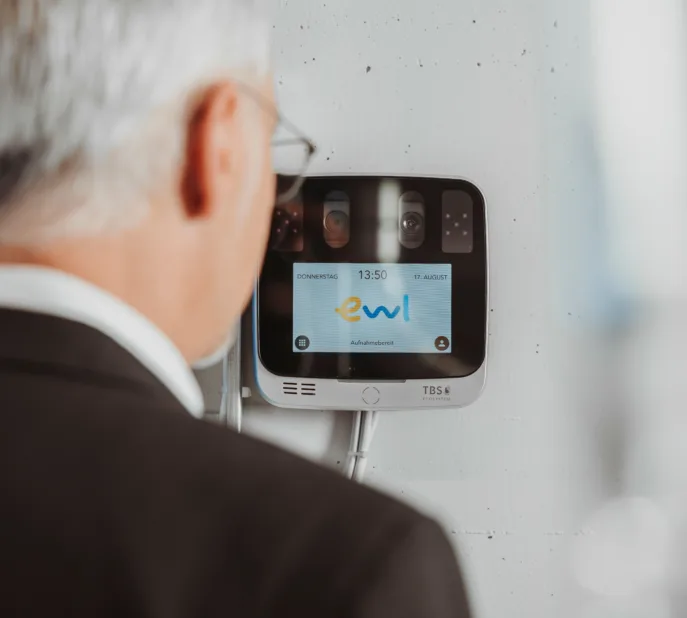
With increasing digitalization and the use of AI, security risks are also increasing. Cybersecurity and the physical protection of data centers are becoming more focused – especially for companies with critical applications. Protected locations, redundant systems, and controlled access are central prerequisites for stable operation.
AI Needs Powerful and Efficient Data Centers
With AI, the demands on computing power increase significantly. Especially so-called GPU workloads generate high power densities and significantly more waste heat than classical IT systems. This brings new requirements for data centers:
Higher Energy Density: AI servers require significantly more energy per rack than traditional infrastructure. Modern data centers must therefore be designed for scalable power supply and intelligent load distribution.
Advanced Cooling: Classical air cooling is increasingly reaching its limits with AI workloads. Liquid cooling and innovative cooling systems are becoming crucial efficiency factors.
Data Centers as the Foundation of the Digital Future
The requirements for modern data centers are changing rapidly. AI, digital sovereignty, sustainability, and security are increasingly becoming strategic success factors.
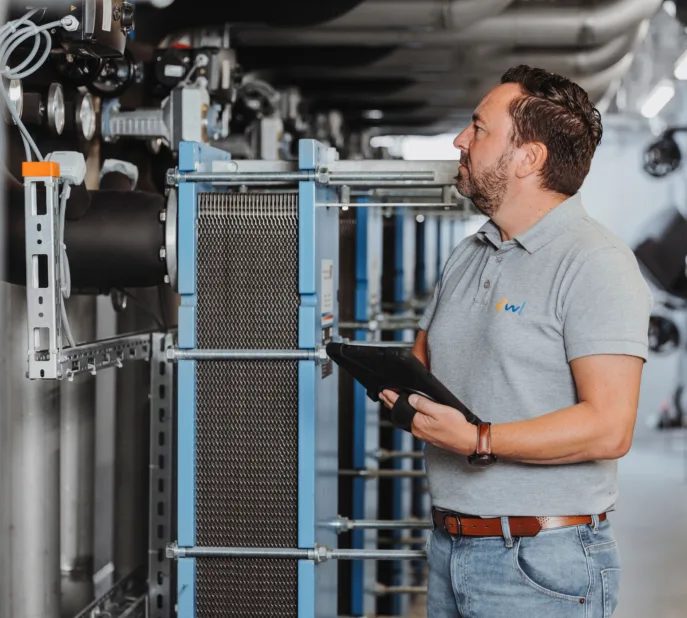
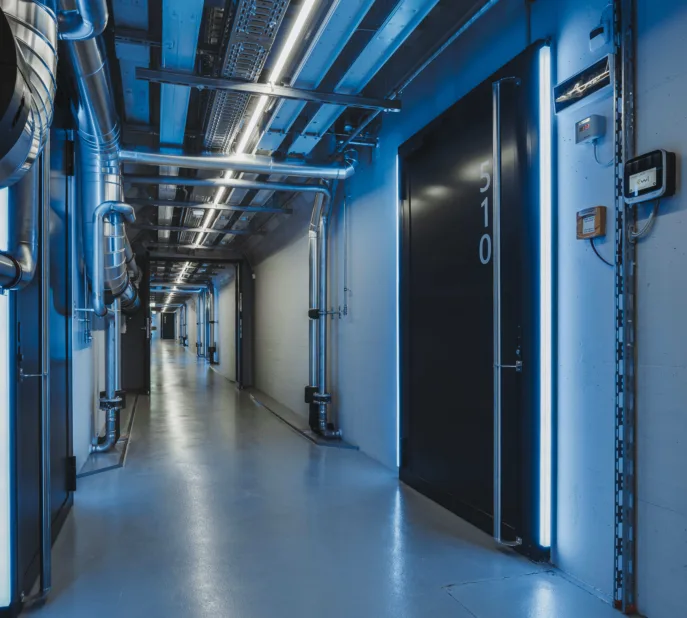
How these requirements can be combined in practice is shown, for example, by the Stollen Luzern data center. The location combines modern data center technology with regional anchoring and energy-efficient operation. Cooling is done with lake water from Lake Lucerne, and the resulting waste heat is fed into the local heating network and used to heat buildings. At the same time, the infrastructure in the former civil defense facility offers high physical protection. Personal contacts and local operation by ewl energie wasser luzern provide additional transparency and customer proximity.
Conclusion
The example shows: Data centers today are far more than mere technical infrastructure. They are increasingly becoming a strategic component of digital value creation and form the basis for stable, secure, and future-proof applications. For companies, choosing the right data center thus becomes a long-term investment in security, control, sustainability, and future viability – especially in the AI era.