8/28/2025 | Updated on 12/5/2025 | Reading time: 4min
Energy Efficiency in the Data Center: Technologies for the Future
The demand for computing power is growing rapidly. Data centers must therefore become increasingly energy-efficient. Holistic solutions such as modern cooling, waste heat utilization, and lake water technology are in demand. The Stollen Luzern data center shows what the operation of the future looks like.
-
Team
Data Center Stollen Lucerne
Content
Driven by artificial intelligence, big data, and cloud services, the demand for computing power is increasing. This also increases the pressure on data centers to optimize their energy consumption. Energy efficiency is increasingly becoming a strategic quality feature – and goes far beyond classic PUE values. Modern data centers rely on holistic approaches: from smart air management and advanced liquid cooling to targeted waste heat utilization and sustainable cooling systems with lake water. How these technologies shape the operation of tomorrow and why the Stollen Luzern data center is taking a pioneering role in this, you can read here.
Energy Efficiency as a Comprehensive Concept
For a long time, the Power Usage Effectiveness (PUE) value was considered the main metric for efficiency in data centers. Even today, a low PUE value is still important – but modern concepts go much further. The entire energy chain is considered: from power supply to cooling to heat recovery. Future-proof data centers think of energy efficiency not only technically, but also ecologically and systemically.
Cooling in Transition: Air as Today's Standard – but Not the Goal
Cooling has traditionally been one of the largest energy consumers in data center operations. Currently, it is still based on air in most facilities – especially in classic industrial IT and enterprise servers. Even though air cooling cannot be completely replaced due to existing hardware requirements, it is clear: its efficiency is limited. It is therefore all the more important to make it as efficient as possible.
Modern air cooling strategies therefore rely on precise cold/warm separation – for example, by consistently enclosing racks – as well as on adaptive controls that regulate airflows as needed. However, especially in high-performance computing (HPC) and AI applications, it becomes clear: the future belongs to liquid-based systems.
Liquid-to-Liquid Cooling: Rethinking Efficiency
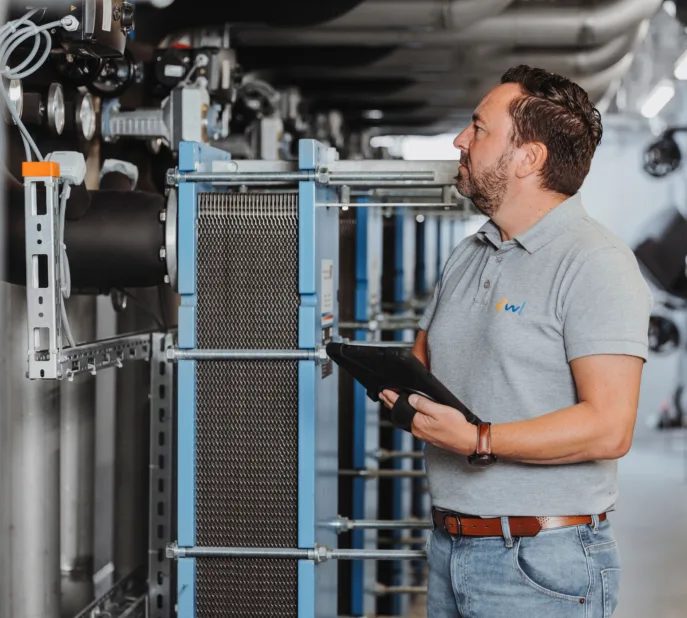
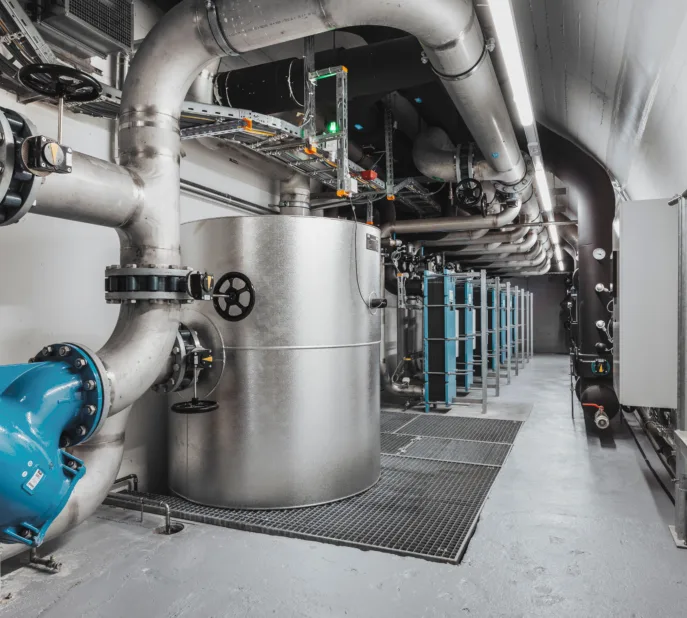
Liquid-to-liquid cooling systems enable direct or indirect heat dissipation via water or other liquid circuits. They offer significantly higher heat transport capacity than air and drastically reduce the energy required for cooling. In addition, liquid cooling allows for a much more compact and power-dense design of IT infrastructure – a decisive advantage for HPC loads or AI clusters.
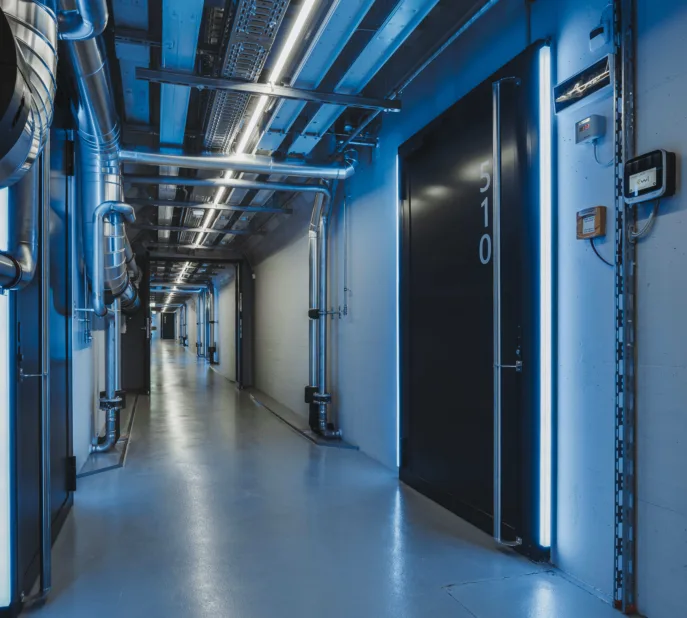
The Stollen Luzern data center by ewl is already specifically preparing for and integrating these technologies today. The infrastructure is designed to accommodate liquid-cooled systems and to work with them efficiently and safely – including appropriate recooling capacities.
More about liquid cooling at the Stollen Luzern data center
Heat is Not a Waste Product – but a Resource
Another crucial aspect of modern energy efficiency strategies is the utilization of waste heat. Instead of releasing it unused into the environment, it can be used to heat adjacent buildings, fed into local or district heating networks, or prepared for industrial use.
Here, too, the Stollen Luzern data center sets a good example: concepts for targeted heat recovery are already being implemented – a win for the environment and energy balance. In combination with liquid cooling media, the potential of this technology increases significantly.
Cooling with Lake Water – Sustainable and Local
A particularly sustainable approach is cooling with water from nearby lakes. By using deep water layers, a constant, low temperature can be used for cooling all year round – without mechanical cooling generation. The crucial point: the ecological footprint must be minimized. At the Stollen Luzern data center, lake water cooling is implemented in such a way that neither flora nor fauna are negatively impacted – through controlled intake and discharge, strict temperature limits, and continuous monitoring.
Conclusion
Energy efficiency in the data center is not a static goal, but a dynamic process. It means operating existing technologies optimally – and at the same time paving the way for new, significantly more efficient systems. Air cooling will continue to play a role in the future, but the trend is clearly towards liquid cooling, smart energy flows, and waste heat utilization. The Stollen Luzern data center shows how this change can concretely look: with efficient air management, advanced liquid cooling infrastructure, sustainable lake water cooling, and the active return and use of waste heat. This creates not only a powerful but also a future-proof data center – ready for the requirements of tomorrow.